Planning tool / authority
Who handles this question?
Enter the property address, then use the official lookup to confirm the water provider before contacting the right service.
Open the toolHAUSE / Kelowna / Plumbing
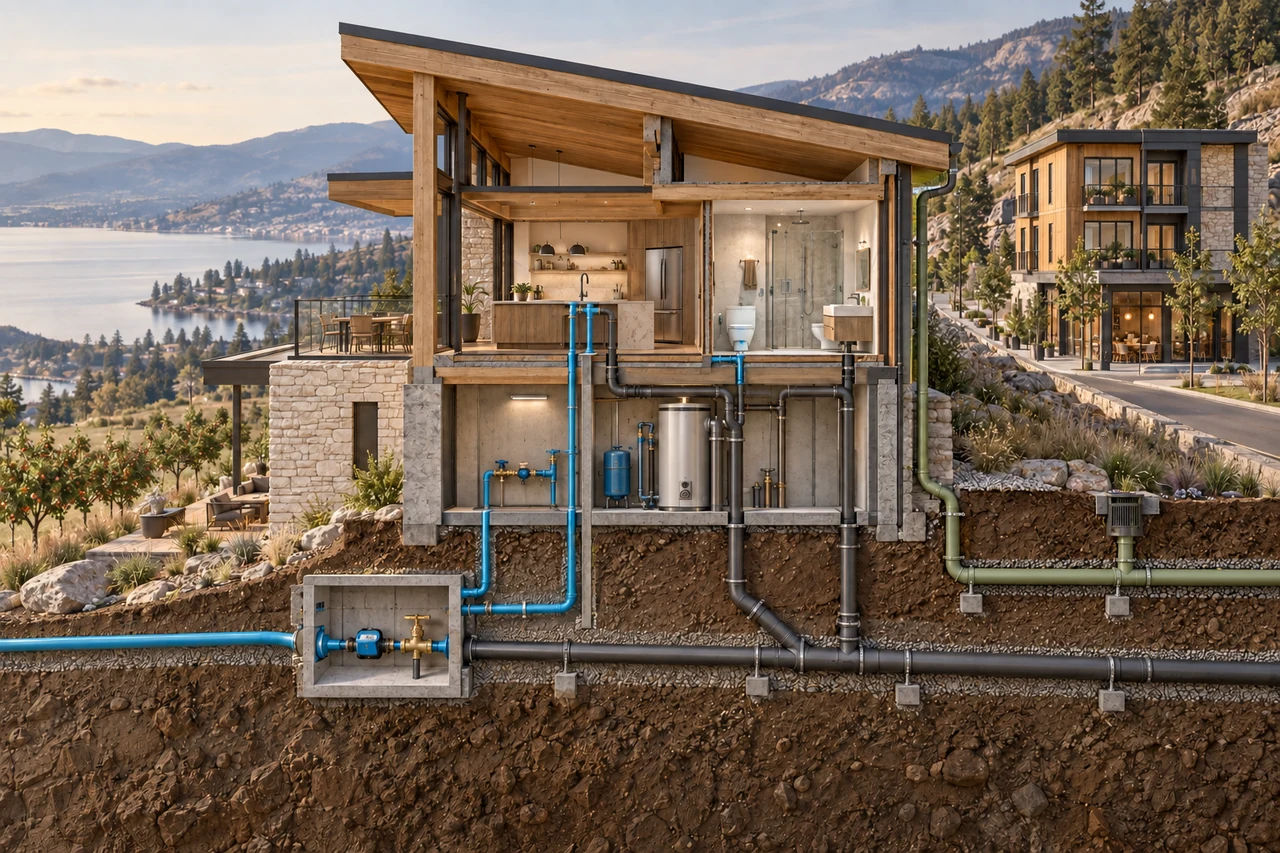
Understand household repairs, commercial projects and Kelowna’s water, sanitary and storm systems. Compare a clear scope, use measured planning tools and send a request for a person to review.
A civic address, the current water operator and the private service boundary give the plumbing conversation a better starting point. Do not assume the municipal boundary identifies the supplier.
The building drain, sanitary service, storm connection and on-site systems serve different purposes. Describe which system is involved before choosing a trade or comparing a scope.
Fixture locations, occupied access, permit responsibility, inspections and reinstatement belong in the brief before a wall or slab is opened.
Repair, replacement and a larger project are different decisions. Use the guides and tools to record observations and compare the written inclusions rather than a headline price.
The complete picture
Understand the water. Define the work. Start with the system, property and actual authority, then work through the decisions that change the project.
Repairs, renovations and fixture decisions.
02 / 10 articlesOperating buildings and shared systems.
03 / 10 articlesUnderstand separate networks and service boundaries.
04 / 6 articlesCompare complete proposals without invented prices.
05 / 9 articlesPermits, evidence and safe planning.
06 / 5 articlesAddress-specific infrastructure and authority questions.
Kelowna / Context matters
Understand household repairs, commercial projects and Kelowna’s water, sanitary and storm systems. Compare a clear scope, use measured planning tools and send a request for a person to review.
Separate a fixture fault, building-side problem and water-provider question.
Access, isolation, permits, inspection and restoration belong beside equipment in a proposal.
Service districts, the GEID transition and varied development conditions need address-specific answers.
Measure. Record. Compare.
Use your observations and entered amounts. These tools organise a planning brief; they do not diagnose a hidden fault, choose equipment or approve regulated work.
Planning tool / authority
Enter the property address, then use the official lookup to confirm the water provider before contacting the right service.
Open the toolPlanning tool / flow
Enter collected litres and elapsed seconds to calculate observed fixture flow in litres per minute.
Open the toolPlanning tool / leak
Enter collected millilitres and elapsed minutes to estimate daily leak volume and a clearly labelled 30-day example.
Open the toolPlanning tool / quote
Enter a proposal amount and check whether scope, permits, access, restoration, testing and exclusions are clearly included.
Open the toolPlanning tool / hotwater
Enter simultaneous outlet count, mixed-water flow and duration to estimate a use event’s total mixed-water volume.
Open the toolInside the library
54 focused guides cover the work, decisions and property context. Read a focused topic or search the complete library.
 Household plumbing
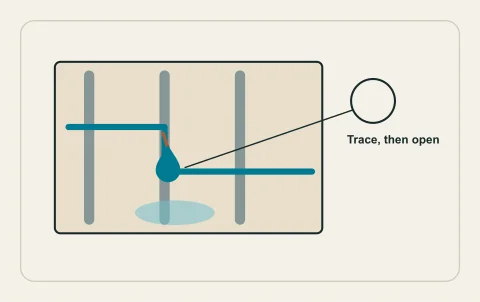
A wet patch tells you where water appeared, not necessarily where it escaped. A supply leak, fixture seal, appliance connection, roof leak and condensation can leave similar marks. The useful first decision is how to stop damage safely while preserving enough evidence to investigate the actual cause.
 Household plumbing
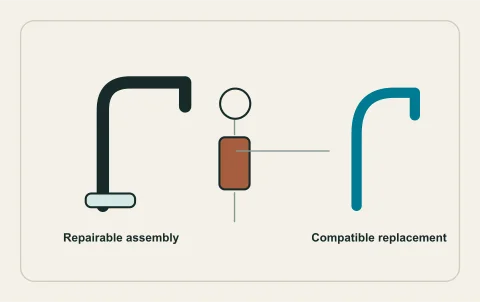
A dripping faucet, running toilet or awkward shower control can be a small repair or a sign that a larger assembly needs attention. Start with the component and the symptom. A fixture replacement is most useful when it solves the actual problem without creating incompatible connections or sacrificing service access.
 Household plumbing
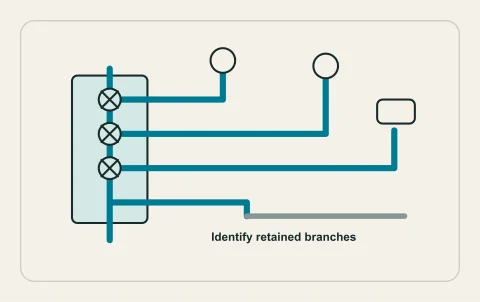
A repipe is a distribution-system project, not just a length of new tubing. It changes the routes that bring water to fixtures and may disturb several rooms. Evidence about the existing material, connections and failure history should establish the need, while a route and restoration plan establish the real scope.
 Household plumbing
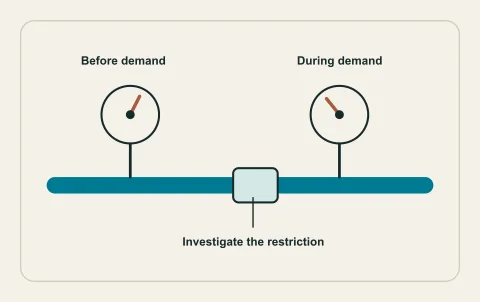
Weak water at a tap is an observation, not a pressure reading. Pressure, available flow and fixture performance interact, but they are different things. A useful investigation starts by mapping where and when the symptom occurs so a local restriction is not confused with a service-wide or provider-side issue.
 Household plumbing
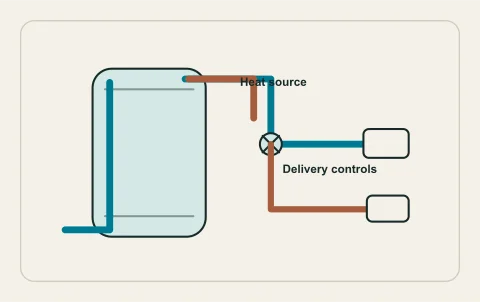
Choosing a water heater starts with how the building uses hot water and what the installation can support. The tank or appliance price is only one line in the project. Access, energy service, drainage, safety controls and the parts of the distribution retained can determine whether the replacement actually improves daily use.
 Household plumbing
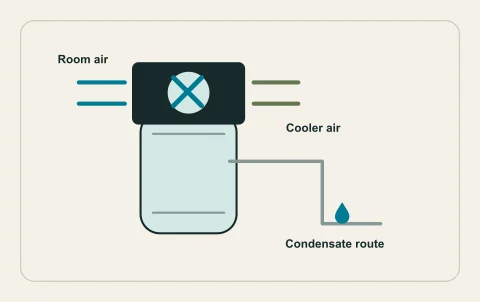
A heat-pump water heater moves heat from surrounding air into water. That makes the room part of the installation decision. A product that looks suitable on an efficiency label may still need a different location, service arrangement or operating strategy to fit the building and the way people use hot water.
Describe the location, symptoms or proposed work. A person reviews the brief; any referral or contractor arrangement is a separate step with your agreement.