Map the complaint by fixture and operating condition
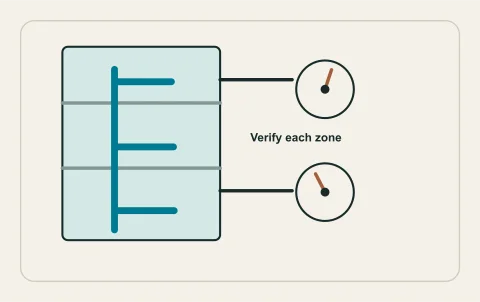
Note which fixtures are affected and whether hot water, cold water or both behave poorly. A single tap can have a local issue while several fixtures changing together point toward a broader supply question. Record whether the complaint appears only during overlapping use, after an interruption, at particular times or following work. Do not assign a cause from the pattern alone.
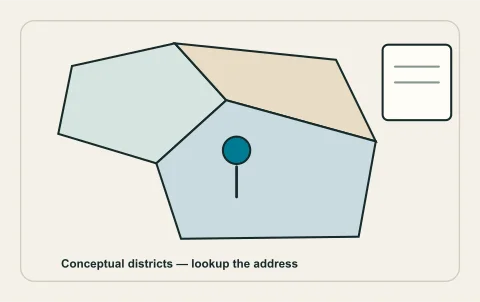
Describe the result in ordinary terms: longer filling time, pulsing, a sudden change, low shower performance or unusual noise. If neighbours report a simultaneous new problem, contact the supplier with the address and timing. Kelowna’s provider lookup is a better starting point than assuming all addresses use the same utility. A neighbourhood name does not tell you the relevant network or pressure zone.
Measure a safe flow sample without calling it pressure
If a fixture can be used safely without leaking, scald risk or a drainage problem, a measured collection can describe its flow. The relationship is collected litres divided by elapsed minutes. Record the fixture, hot or cold setting and whether other demand was occurring. The measured-flow tool converts a volume and collection time; it does not establish a code-compliant supply capacity.
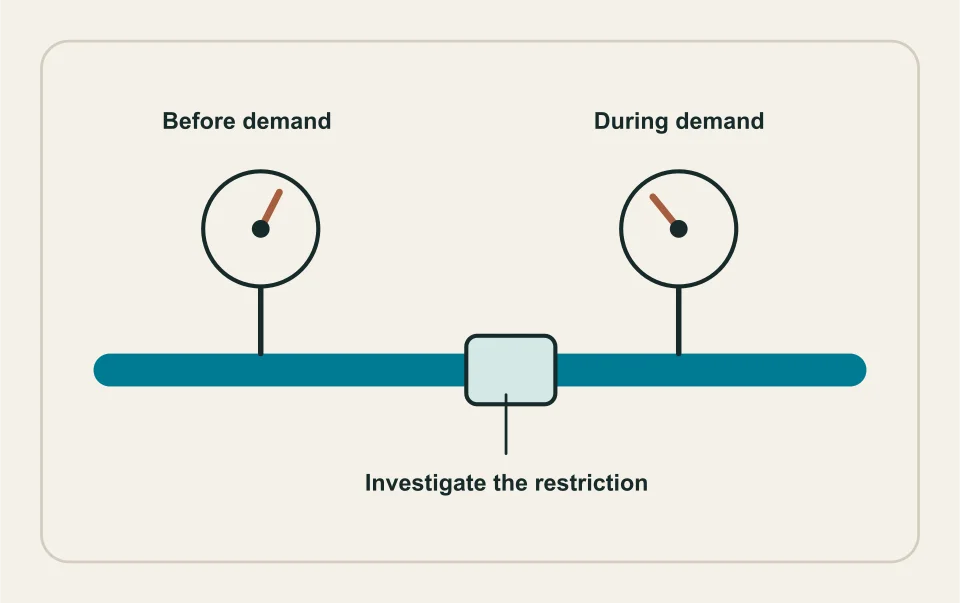
Do not remove unfamiliar components or connect a gauge to utility equipment simply to obtain a number. Pressure measurements need an appropriate location and interpretation. Static readings and readings during demand answer different questions. A professional can decide which measurements are useful and whether a restriction, pressure control, supply condition or fixture characteristic explains the symptom. Keep the original observations so measurements can be compared under similar conditions.
Investigate the smallest credible boundary first
If one fixture behaves differently, compare its local controls and connections through a qualified assessment before proposing a building-wide change. If only hot water is affected, include the water heater, distribution and mixing controls in the investigation. If both hot and cold are affected across the building, the service entry and overall demand deserve attention.
An apparently open handle does not prove that a valve or component is functioning correctly. Likewise, a pressure-control device should not be adjusted blindly to overcome weak performance. Changing one setting can introduce risks elsewhere. Ask the investigator to identify measured evidence and the expected result of a proposed repair. This makes a replacement recommendation reviewable and avoids paying for successive speculative equipment changes that do not improve the actual complaint.
Understand provider and property-side interfaces
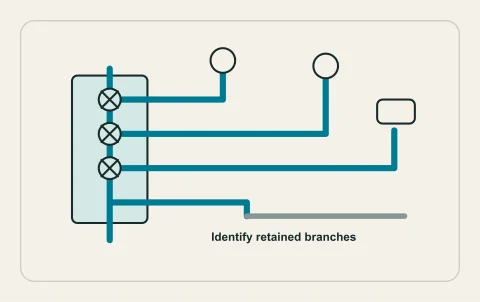
The public network and private service are connected but have different responsibilities. Check the relevant provider’s current notices for interruptions or planned work, then clarify the property-side entry and equipment. A meter, backflow assembly, pressure-control device or retained buried service can each be part of the assessment; ownership and access need confirmation.
The City cross-connection guidance notes that protective equipment can affect pressure, depending on the assembly. That does not justify removing or bypassing it. Protection must remain suitable for the hazard, and product-specific performance belongs in the design discussion. Do not transfer a pressure claim from another Kelowna district to this address or assume that a hillside home requires a pump solely because of its location.
Evaluate pump or repipe proposals as complete systems
A booster recommendation needs a reason based on verified supply conditions, demand, controls and the provider’s requirements. A larger pipe recommendation needs the actual route and retained restrictions considered. Ask what will remain unchanged and which measurement will demonstrate improvement. Equipment selection is a design task, not a result that follows from a consumer flow sample alone.
Include access, energy-service coordination, noise, maintenance, protection against unsafe operation and commissioning in the scope where relevant. A new pump can be unsuitable if the upstream service or permission boundary has not been resolved. A repipe can be incomplete if a retained entry component controls the result. Use the scope comparison guide to distinguish the diagnosis, selected remedy and performance verification from an open-ended promise of stronger water.
Define a measurable, realistic handover
Agree on which fixtures and simultaneous-use conditions will be checked after work. Record the before-and-after measurements and equipment settings that the professional considers relevant. The objective might be resolving an identified restriction or improving a particular use sequence; avoid an undefined promise that every outlet will always feel the same.
Keep manufacturer documents and safe user instructions, and label the professional service contact for pressure-control or pump equipment. If a new symptom follows utility work, report the time and location to the correct provider instead of immediately changing building settings. A human-reviewed request can include a fixture map, measured filling times, overlap conditions and any current provider notice. That evidence is far more helpful than simply asking for a stronger pump.
Questions people ask
Does low flow always mean low pressure?
Should I adjust the pressure valve myself?
Are hillside homes always pump jobs?
Can a backflow device be removed to improve performance?
What should I measure before requesting help?
Sources and further reading
- Find your water provider ↗ · City of Kelowna. Checked 2026-10-02.
- Cross connection control ↗ · City of Kelowna. Checked 2026-10-02.
- Water Regulation Bylaw ↗ · City of Kelowna. Checked 2026-10-02.
Confirm the current requirements with the responsible authority for the actual address and work. This reference does not replace site assessment or an official decision.