Separate an active failure from a planned improvement
Record the current appliance label, location, visible condition and the complaint. A leaking tank, unreliable hot water, long delivery delay and insufficient water during overlapping use are different problems. A replacement may address some of them while leaving a distribution or control fault unchanged. If water is escaping or equipment appears unsafe, stop relying on a web request for urgent response and obtain direct professional help.
Do not open covers, alter gas controls, touch wet electrical equipment or manipulate relief devices to diagnose the problem. Photographs of accessible labels and the surrounding room are enough for initial planning. State whether the request is an urgent failure assessment or a future equipment comparison; those have different scheduling and investigation needs. Keep the replacement decision separate from any drying or restoration work caused by an existing leak.
Describe the demand rather than counting occupants alone
List the actual hot-water events that create difficulty: successive showers, a bath, laundry, a dishwasher or business use. Record overlap and whether the problem is lack of usable water, a temperature change or waiting for delivery. Occupant count is context but does not capture fixture characteristics, timing or a growing household. Use safe observed measurements only; do not expose yourself to hot water to obtain data.
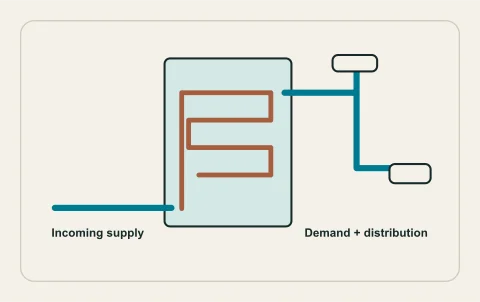
The hot-water sequence worksheet can organize mixed-water flow and event duration. Its result is observed use, not an appliance size. Storage, recovery, incoming-water conditions, distribution losses and protective temperature control require professional interpretation. Ask the proposal to explain how the selected model addresses the use pattern and which existing complaint it will not address. This is more useful than accepting a larger tank by default.
Compare equipment categories within the real room
Storage, tankless and heat-pump systems have different installation interfaces. Existing fuel or energy service does not establish that every new model is compatible. Check the exact proposed product specification, dimensions, service clearances, access route and supporting services. A narrow stair or finished enclosure can matter as much as the apparent floor area around the old appliance.
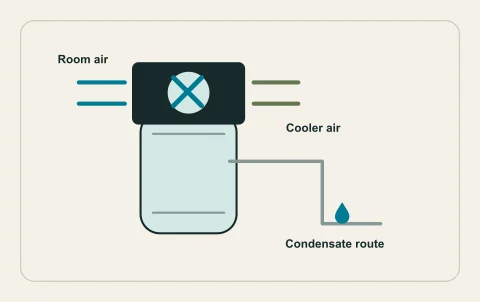
Natural Resources Canada’s water-heater information is a useful product-category starting point. Certification or efficiency labels do not settle the suitability of this installation. Ask who verifies energy-service capacity, ventilation or combustion interfaces where applicable, condensate requirements and noise. Gas and electrical work belong with the appropriate qualified professionals; this guide does not provide installation instructions or promise rebate eligibility.
Keep safety controls and distribution in the scope
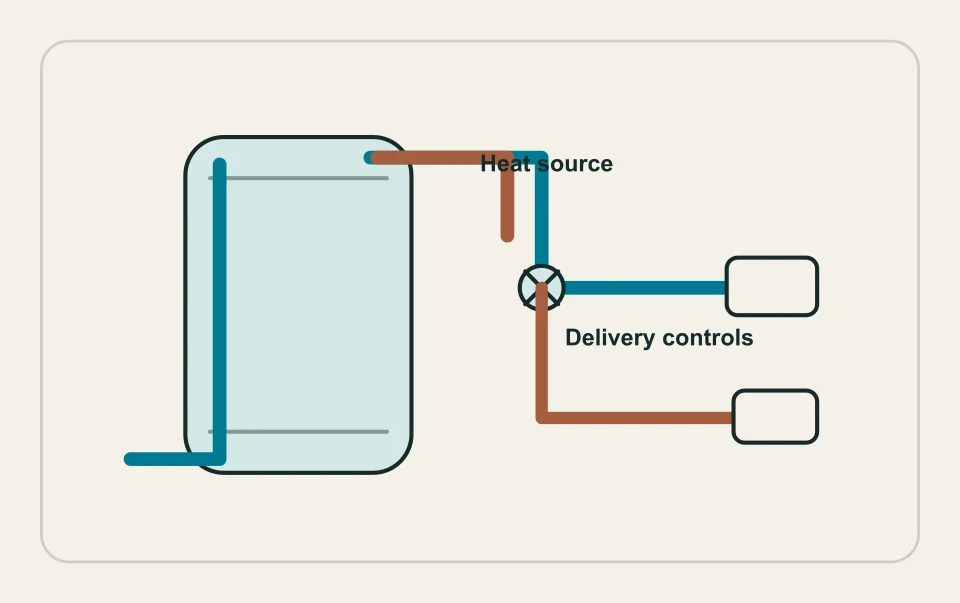
The hot-water system includes more than the heat source. Mixing controls, discharge arrangements, isolation and the route to fixtures should be assessed where relevant. Health Canada’s guidance explains the need to balance water-system hygiene and scald protection. Do not adopt an arbitrary temperature from an online discussion or bypass a limiting device to increase apparent capacity.
Ask how the new appliance will connect to retained plumbing and how operation will be verified. A long wait at a distant tap can be a distribution issue rather than proof of a small heater. If recirculation is proposed, require its control, insulation, commissioning and maintenance implications to be explained. A replacement should not quietly introduce a new circulation loop or leave a known defective component outside the agreement.
Compare a complete proposal, not appliance prices
Request the exact model and included components, removal and disposal, access work, energy-service coordination, permit responsibility, inspection, testing and restoration. If the proposal assumes existing controls or connections can be retained, have that assumption identified. Unknown concealed conditions should have an approval process rather than an open-ended instruction to proceed.
Start permit questions at Kelowna’s official plumbing guidance; confirm the actual work and relevant authority with the responsible professional. Municipal plumbing approval is not permission to undertake gas or electrical work personally. Compare proposals only once these boundaries are aligned. A cheaper appliance line can produce a more expensive complete project if access, controls or restoration were omitted from the first price.
Make commissioning and user care part of handover
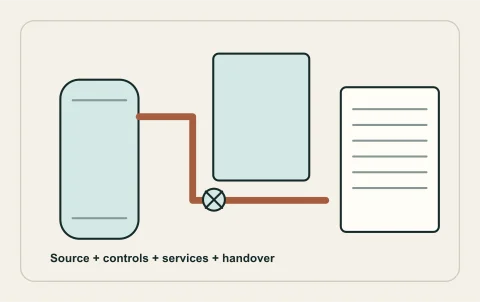
Keep the installed model, serial identification, operating instructions, warranty terms and inspection records. Ask the installer to explain normal user controls, warning conditions, maintenance responsibilities and who handles a fault. Confirm the intended use sequence was considered during commissioning. Avoid treating a warm tap immediately after installation as the only acceptance criterion.
Leave service access clear and keep the documents where the next owner or property manager can find them. For an occupied rental or shared building, include residents’ communication and the authorized maintenance contact. A human-reviewed request should describe the existing model, room constraints and actual complaint. HAUSE organizes the request for review; it does not certify equipment remotely, dispatch emergency crews or guarantee a particular contractor’s response.
Questions people ask
Should I simply buy the same tank size?
Will tankless remove the wait at a distant faucet?
Can I lower the heater setting to avoid scalding?
Are permit and inspection costs included automatically?
What makes a useful replacement request?
Sources and further reading
- Water heaters ↗ · Natural Resources Canada. Checked 2026-10-02.
- Residential premise plumbing pathogens and water quality ↗ · Health Canada. Checked 2026-10-02.
- Plumbing & heating permits ↗ · City of Kelowna. Checked 2026-10-02.
Confirm the current requirements with the responsible authority for the actual address and work. This reference does not replace site assessment or an official decision.