Read use within its actual context
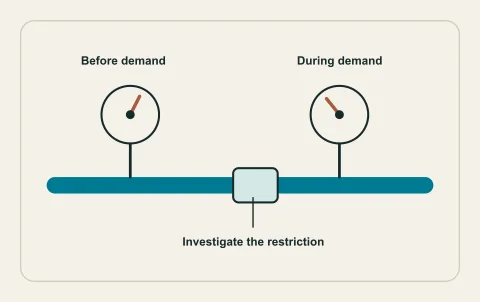
Compare consumption over equivalent periods while noting occupancy, visitors, irrigation and known leaks. A bill increase can reflect use, tariff changes or a different reading period; it is not automatic proof of a concealed leak. Keep the actual supplier and meter or account information identified without sharing account credentials in a general request. Ask the operator about a reading or billing uncertainty before converting it into a pipe-replacement proposal.
Describe a sustained change and what else changed at the property. A vacant interval and a busy occupied interval are not like-for-like comparisons. A useful record can help a qualified professional decide what investigation is relevant. It should not present a single monthly number as evidence of the precise failed component or a complete estimate of future savings.
Confirm source context using the official water-provider lookup.
Measure a safe fixture event cautiously
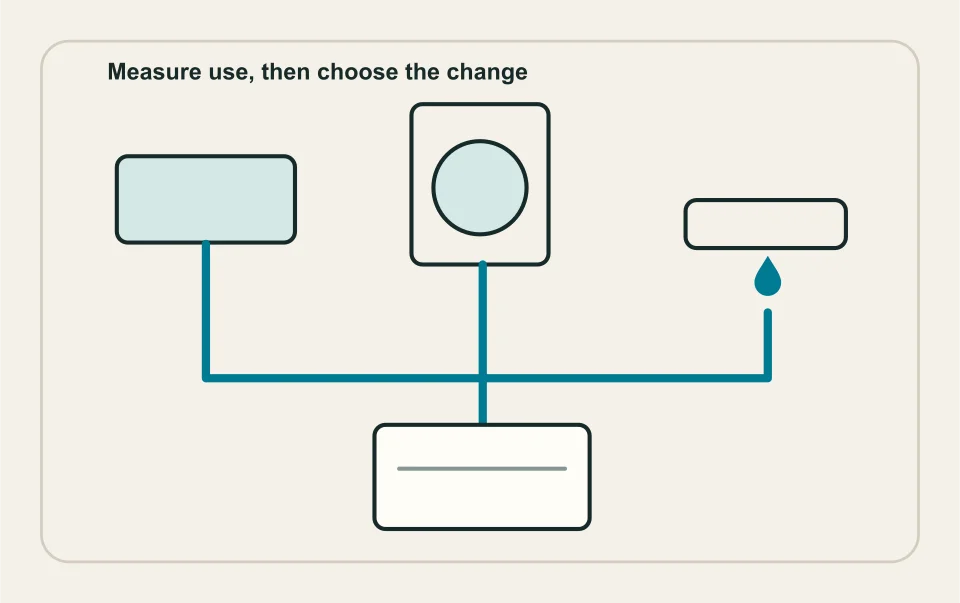
The flow tool calculates litres per minute from entered litres and seconds. Use it only for safely accessible ordinary observations without approaching hot water hazards or manipulating unfamiliar equipment. A result describes that event and the supplied inputs. It does not establish pressure, code compliance or every fixture’s performance. Recording the fixture and date makes the measurement easier to interpret later.
Similarly, a collected leak volume can be expressed over time when a safe accessible observation is appropriate. Do not create a leak or leave an active problem unattended to produce data. Actual leakage can vary; a labelled daily or 30-day example is an arithmetic projection, not a guarantee that the condition remains constant or a diagnosis of what needs repair.
Use the current supplier restrictions
Water-use restrictions and seasonal instructions can change. Check the actual supplier’s current official page and the source serving the relevant connection. This guide deliberately avoids stating a fixed present watering stage or universal timetable. A saved notice can be useful evidence of what applied then without being today’s instruction.
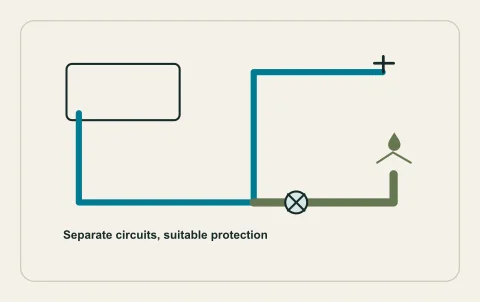
Keep permitted use and plumbing alteration separate. A watering restriction does not authorize a new irrigation connection, prove source quality or select backflow protection. Ask the supplier when the connection’s classification is unclear. Agricultural, domestic and other arrangements should not be combined into one assumed rule simply because the property has a Kelowna mailing address or lies near a familiar irrigation district.
When comparing before-and-after use, write the start and end dates and explain changes in who used the property. Keep measured litres distinct from billed charges, because a tariff or fee can change independently of consumption. Ask the supplier to explain a reading anomaly rather than interpreting it as a specific plumbing fault. A contractor’s repair record should identify the actual component and check, while the household use log records later observations. Combining those records can support a sensible follow-up question without turning correlation into proof that one product produced every difference in the account total.
Find the current operator through the City utilities directory and ask for the live instruction applicable to that source.
Prioritize confirmed waste and practical scope
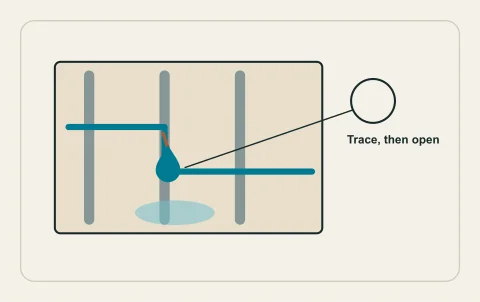
A visible dripping connection, running fixture or documented equipment problem can justify a targeted assessment. Ask what evidence supports the repair and how the result is checked. Do not replace every appliance from a guessed citywide average. Product selection should consider compatibility, user needs, access and the actual installation as well as intended reduction in use.
Compare the complete project: investigation, products, qualified interfaces, approvals, testing and restoration. A conservation claim does not eliminate ordinary work responsibilities. Request any saving estimate’s assumptions and avoid treating a marketing percentage as guaranteed for your occupancy or tariff. A practical first step can be a clearly scoped repair while broader renovation decisions remain unsettled.
Keep performance and ordinary use records
After work, retain the finding, changed component and checks completed. Compare observations under reasonably similar conditions while marking seasonal or occupancy changes. A lower bill alone cannot certify workmanship, and an unchanged total may reflect unrelated increased use. Ask the qualified provider what follow-up is appropriate if the original symptom remains.
Keep supplier instructions, installed product information and maintenance duties together. A treatment device or irrigation controller can add responsibilities that matter to its intended performance. Do not invent universal servicing intervals or alter regulated settings to pursue an arithmetic saving. The record should help later decisions distinguish measured use, calculated examples, actual repairs and remaining uncertainty without presenting this planning site as a billing or compliance authority.
Prepare a water-use request
Prepare a dated use log that identifies occupancy, irrigation and the comparison period. Distinguish billed charges from recorded consumption and safely observed events. Where a tool was used, include the entered volume and elapsed time so another reader understands the calculation. Label a daily or monthly projection as an example based on constant-rate assumptions, not a measured future total. Do not leave a fault active simply to collect a longer sample.
Ask the relevant supplier about account or reading uncertainty and the qualified provider about the specific observed component. A repair proposal should explain the evidence, installed scope and checks, while the household log preserves later use conditions. Compare product compatibility and complete installation rather than selecting equipment from an unsupported saving percentage. Retain current supplier restrictions separately so a change in watering instructions does not become an unexplained apparent repair effect.
The request form can send this information for a person to review and reply. It does not diagnose a hidden leak, certify pressure, calculate a guaranteed bill saving or book attendance. This planning reference makes no response-time promise. For an active leak creating immediate danger, use the appropriate responsible service first; after control, the log can help clarify the remaining assessment without turning arithmetic into a universal equipment recommendation.
Questions people ask
Does a higher bill prove a leak?
Does the flow tool measure pressure?
Is a daily leak projection guaranteed?
Can this page give today’s watering schedule?
How should I assess a saving promise?
Sources and further reading
- Find your water provider ↗ · City of Kelowna. Checked 2026-10-02.
- Water Regulation Bylaw ↗ · City of Kelowna. Checked 2026-10-02.
- Cross connection control ↗ · City of Kelowna. Checked 2026-10-02.
- Utilities directory ↗ · City of Kelowna. Checked 2026-10-02.
Confirm the current requirements with the responsible authority for the actual address and work. This reference does not replace site assessment or an official decision.