Identify the water and the observed route
Record whether the concern follows rainfall, snowmelt, irrigation, fixture use or another activity. A puddle near a building does not identify the buried connection receiving it. Describe visible downspouts, catch basins and other accessible features without lifting unknown covers or entering drainage structures. Existing drawings can support investigation, but mark dates and later alterations that may have changed the route.
Keep rainwater observations separate from wastewater symptoms. A floor-drain backup and a wet landscape can occur together without sharing one cause. Ask the professional which system is being examined and how the actual connection is established. A convenient pipe location or a neighbour’s arrangement is not evidence that your water may be discharged there, nor permission to alter a public drain.
Use the City’s separation and pollution guidance
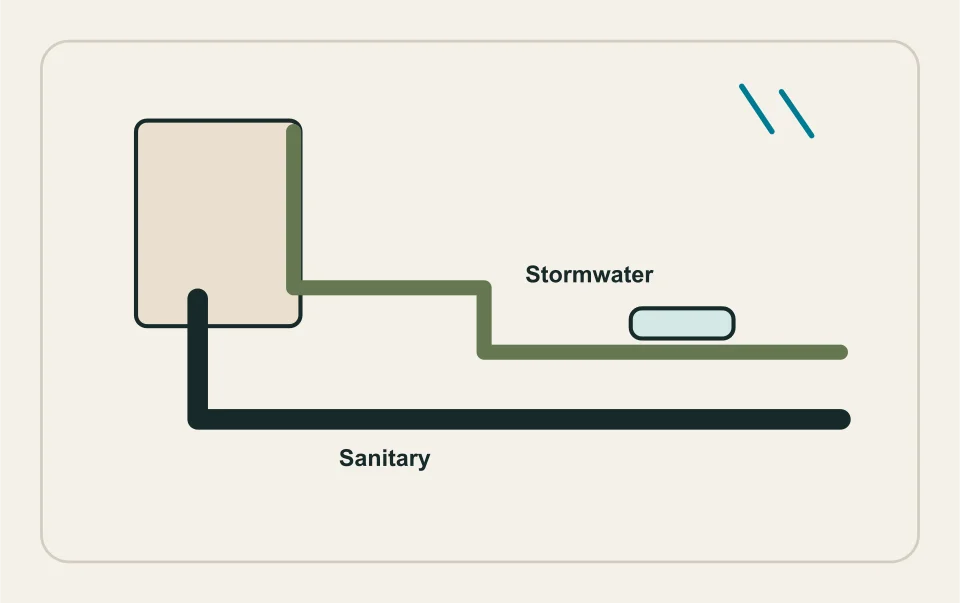
The City’s stormwater information is the official starting point for local drainage and pollution-prevention questions. Its sanitary and storm networks have different purposes. Do not direct contaminated cleanup water, grease, chemicals or another waste stream into a street catch basin because it is easy to reach. Ask the responsible service about the actual material and permitted handling route.
A conceptual diagram cannot determine the correct discharge for a property. Site conditions, public infrastructure and applicable approvals need professional and authority review. Preserve any written instruction and identify the water type it addresses. An answer about ordinary roof runoff should not be reused as a blanket instruction for wastewater, treatment discharge or commercial process water. The scope must keep those categories distinct throughout investigation and construction.
Read the City’s stormwater information for the separate receiving-system and pollution questions.
Assess the site rather than copying a detail
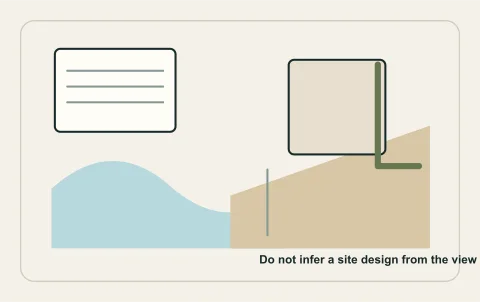
Surface slope, soil, structures, neighbouring property and receiving infrastructure can affect drainage options. Ask the responsible professional what information is needed to evaluate the proposed route. Do not install a soakaway, connection or discharge point from a generic illustration. A method appropriate for another property may create an unexamined consequence here, especially where environmental or hazard conditions need review.
Keep the work within the correct jurisdiction and ask about relevant permit or servicing processes. A landscaping change can interact with buried services and building foundations even if no fixture is moved. Identify who arranges records, locating and any required design. Avoid treating an approximate owner sketch as surveyed grades or a complete engineering drawing, and state any uncertainty that affects the proposed outcome.
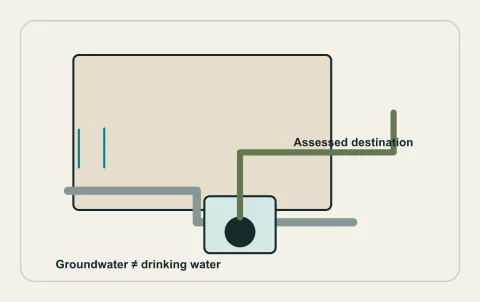
Discuss the receiving point as a specific project item, not an arrow disappearing beyond the edge of a sketch. Ask which records or assessment establish its suitability and who owns the infrastructure involved. A proposal can be incomplete even when the private pipe is well described if the outlet remains assumed. Keep any source-control question separate from the route geometry: the type of water being handled matters as well as where it flows. Record what changes in use would require another enquiry, so a future contractor does not adopt the route for an unrelated contaminated waste stream.
Use the City’s environmental development permit entry point to ask about the actual parcel and proposal.
Compare investigation and corrective scope
Specify the system examined, accessible openings, recording or locating where useful, and written findings. If correction is proposed, define the changed segment, discharge arrangement, surface work and approval steps. A service that clears one opening may not establish the cause of recurring water at the foundation. Ask what evidence connects the recommendation to the original event.
Restoration should include affected paving, planting and building finishes where agreed. Discuss occupied-property access, temporary protection and how unexpected conditions are approved. Do not accept a promise of “dry forever” without a clearly limited scope and property-specific assessment. Drainage outcomes depend on the conditions addressed; a repaired downspout cannot certify every foundation, flood or neighbouring runoff issue.
Retain the actual route and maintenance record
The handover should identify the installed or investigated route, outlet and any retained components. Keep relevant photographs, checks and authority records. Ask for ordinary maintenance responsibilities appropriate to the actual system without entering hazardous spaces or dismantling unfamiliar equipment. A generic seasonal calendar is not proof that a particular connection or treatment component is maintained correctly.
Record what was not resolved: an unverified buried branch, another source of water or a broader site concern may need follow-up. If symptoms recur, compare rainfall and use patterns with the previous finding rather than assume the same cause. A clear separation record helps later contractors avoid inadvertently connecting rainwater and sanitary routes or mistaking an old conceptual plan for the approved installed work.
Prepare a stormwater request
Prepare a rainfall-event record with dates, affected areas and the visible route of water. Mark roof discharge, surface collection and the point where the route becomes concealed. Distinguish those observations from sanitary backup or a contaminated maintenance stream. Describe the proposed correction and whether public infrastructure, another property or a building foundation may be involved. Do not send a sketch with an assumed outlet as though it were an approved connection.
Ask the responsible professional what evidence identifies the system and supports the discharge proposal. The written scope should include investigation, any required site review, the changed segment and restoration. Request an actual route record and note what remains unverified. Retain pollution-control instructions for the particular water type; an accepted rainwater path should not later become an assumed disposal point for unrelated waste. If the event recurs, compare timing and location with the original finding before choosing another method.
Use the request form to organize those planning questions for human review. A reply does not authorize discharge, certify grades or reserve a contractor. The site provides no urgent attendance promise. Active flooding, contaminated water or an electrical hazard belongs with the appropriate emergency, utility or building-management channel before ordinary planning continues. Keep the later scope tied to the examined rainwater system rather than a promise to solve every future site event.
Questions people ask
Can wastewater go into a street catch basin?
Does a wet basement prove a downspout problem?
Can I copy a soakaway detail from another property?
Does clearing one storm opening certify the route?
What should a drainage handover include?
Sources and further reading
- Stormwater ↗ · City of Kelowna. Checked 2026-10-02.
- Wastewater ↗ · City of Kelowna. Checked 2026-10-02.
- Plumbing & heating permits ↗ · City of Kelowna. Checked 2026-10-02.
- Environmental development permits ↗ · City of Kelowna. Checked 2026-10-02.
Confirm the current requirements with the responsible authority for the actual address and work. This reference does not replace site assessment or an official decision.