Recognise the conditions that change access
Water can create an electrical hazard, conceal an unsafe floor or load a damaged ceiling. Sewage introduces contamination. Keep people and pets away from affected areas and do not enter standing water, touch wet equipment or move beneath a sagging ceiling. If there is an immediate threat to life or safety, use the appropriate emergency response.
This guide does not teach contaminated cleanup, electrical isolation or sewage handling. The relevant professionals must assess those tasks. A known domestic shutoff that is already safely accessible is different from one requiring entry into a dangerous area. Do not take risks to reach it. A common valve or public curb stop is not an owner’s trial-operation tool. Use the building manager or confirmed provider for the authorized response route.
Stop making the affected condition worse
If drainage is backing up, avoid adding use to the affected system and do not repeatedly flush to demonstrate the symptom. Do not open sewer access points or combine drain chemicals. If any products were already used, tell the attending professional. Avoid trying to reroute sewage or empty contaminated water into a street catch basin.
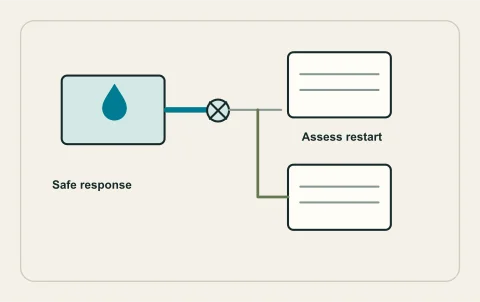
For active supply escape, a person who already knows a safe accessible domestic shutoff may use that established arrangement; otherwise obtain direct help. Do not manipulate unfamiliar controls, gas appliances or wet electrical equipment. In a shared building, notify the designated contact promptly because other units and common systems may be affected. The exact safe action depends on the actual conditions, so do not treat this page as a substitute for the response professional’s instructions.
Use the right direct contact rather than a portal queue
An urgent private plumbing condition needs the appropriate direct professional response. A suspected public-network issue should be reported to the actual utility. Kelowna’s utilities directory is an official routing source, while the address lookup helps identify the water supplier. A postal city or neighbourhood does not settle every service boundary.
Use the building’s established urgent contact for strata, rental or commercial property. Keep landlord or manager authorization and occupant communication active. HAUSE is a human-reviewed reference and request portal, not a plumbing contractor or emergency dispatcher. Its form should be used for organized non-urgent follow-up, not relied on to send a crew or provide a guaranteed response time during an incident.
Record safe facts without assigning the cause
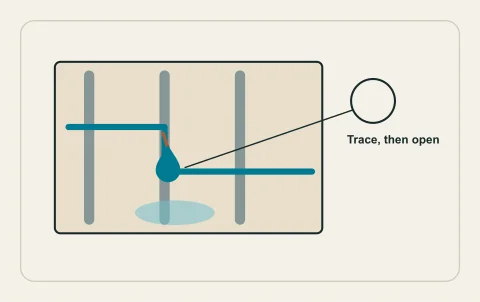
When safe, note the time, area, visible condition, services in use and contacts made. Photograph from a safe position with enough context to identify the room. Do not recreate the failure or re-enter a hazardous area for evidence. Preserve previous repair or equipment records that can be accessed without risk.
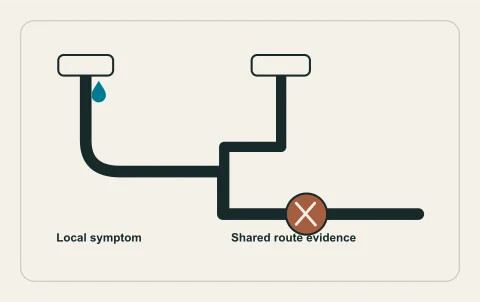
Distinguish active escape, historical stain and suspected contamination in your report. The apparent location is not necessarily the source, and an early suspicion is not a liability finding. In a strata, the source, component responsibility and resulting damage can be separate questions; use the actual plan and process with the Province’s common-property guidance as context. Let the relevant professionals and advisers resolve those boundaries.
Separate containment, repair and restoration
A temporary response may limit damage while leaving the permanent defect unresolved. Record the limitation and who owns follow-up. A pipe repair can stop escape without drying affected materials or restoring finishes. Contamination, moisture, building assemblies and equipment may need separate professional assessment before normal use resumes.
Keep disposal and drainage appropriate. The City’s wastewater guidance and stormwater information explain why those networks are not interchangeable waste routes. This portal gives no cleanup procedure. If an alteration needs permits or inspection, the responsible contractor should coordinate the actual approval path. An urgent attendance invoice is not proof that the complete repair and restoration programme is finished.
Make follow-up address the confirmed problem
Obtain the confirmed finding, permanent repair boundary, relevant tests and any outstanding restoration or monitoring. Keep photographs and approval records with the incident history. A recurring problem deserves a defined investigation, not an assumption that repeated temporary clearing or patching will always be sufficient.
When the urgent condition is under the appropriate direct care, a human-reviewed request can organize a future scope question: renewal options, better isolation records or an unresolved report. Include only necessary evidence and avoid personal information about other occupants. HAUSE does not certify the affected area safe, determine insurance coverage or guarantee prevention. Clear handover and an accountable next step help the owner and relevant professionals manage what remains.
Questions people ask
Should I enter water to reach a valve?
Can I keep flushing to see whether the backup clears?
Will a HAUSE form dispatch someone?
Does stopping the leak complete restoration?
What helps the follow-up professional?
Sources and further reading
- Utilities directory ↗ · City of Kelowna. Checked 2026-10-02.
- Find your water provider ↗ · City of Kelowna. Checked 2026-10-02.
- Common property and limited common property ↗ · Province of British Columbia. Checked 2026-10-02.
- Wastewater ↗ · City of Kelowna. Checked 2026-10-02.
- Stormwater ↗ · City of Kelowna. Checked 2026-10-02.
Confirm the current requirements with the responsible authority for the actual address and work. This reference does not replace site assessment or an official decision.