Recognise when to stop using the system
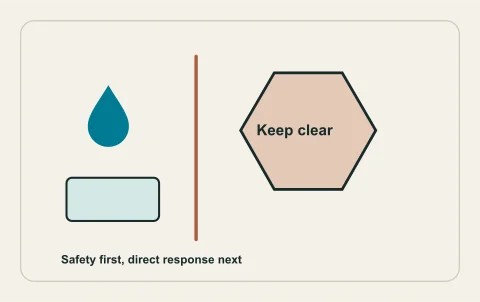
If sewage is coming back into a building, keep people and pets away from the contaminated area and stop use that may add to the affected system. Do not enter standing water near electrical equipment or open a sewer access point yourself. A portal request is not emergency dispatch; urgent conditions need direct professional or utility contact as appropriate.
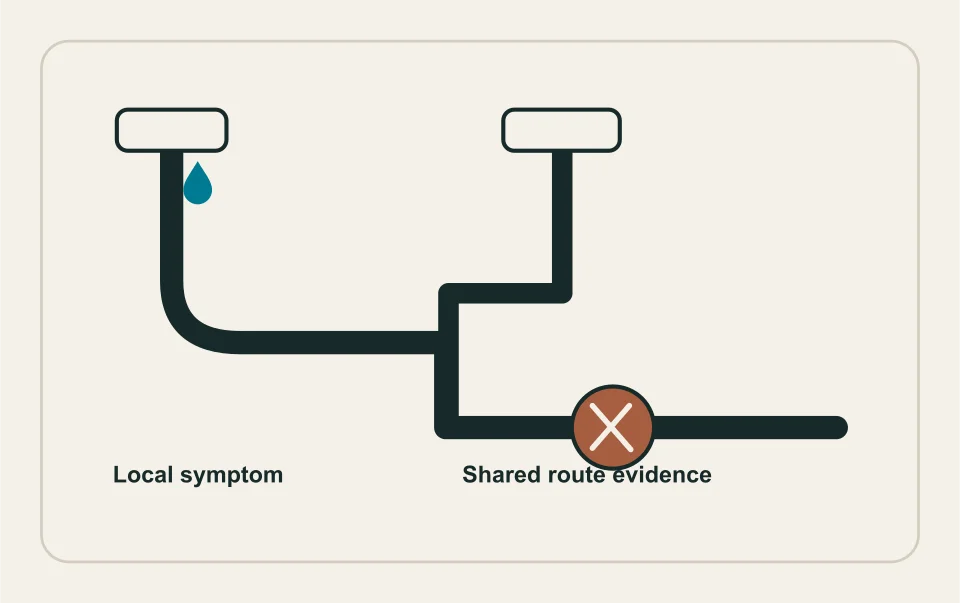
Record which fixtures are affected without repeatedly flushing or running water into a backup. Note whether the symptom began suddenly, follows certain appliance use, or affects neighbouring units. A single slow basin is different from several low fixtures backing up together, but the pattern is evidence rather than a definitive diagnosis. If chemical products have already been used, tell the attending professional; do not combine products or attempt another treatment.
Separate symptom description from cause
Useful observations include the exact fixture, timing, sounds, visible water level and whether the condition occurs during other use. Odour alone does not prove a broken sewer. A slow fixture alone does not establish that the buried lateral needs replacement. Ask the professional what likely boundaries need checking and how the investigation will distinguish them.
Keep a short history of prior clearing, repairs, camera reports and renovation work. A recurring symptom can be important even if a temporary clearing restores flow. Conversely, one isolated incident should not be inflated into a systemic conclusion without evidence. Safe photographs of visible conditions and accessible fixture locations are enough for initial communication. Do not create a dangerous demonstration merely because a contractor requests a video of the backup.
Define what the diagnostic visit includes
Ask whether the visit covers locating the restriction, clearing an accessible obstruction, assessing drainage behaviour, camera recording or only an initial inspection. State how additional access or investigation is authorized. A contractor may need to restore flow before a camera can provide useful views; that sequence should be explained rather than presented as a guaranteed one-step diagnosis.
A report should identify the route assessed, inaccessible portions and confidence in the findings. Separate an obstruction removed today from a confirmed defect that may need future work. If the technician recommends further assessment, ask what decision that evidence will support. The aim is to obtain a result you can use, not simply pay for a tool without understanding what it observed or what remains unknown.
Use cameras and locating with their limits visible
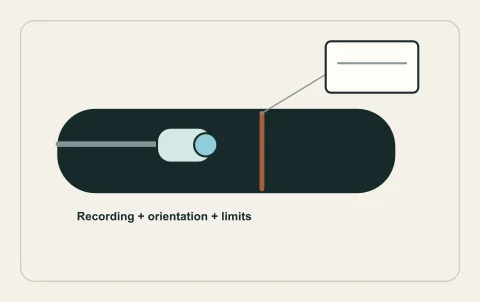
A camera can show accessible internal conditions, but it does not reveal every exterior condition or prove all levels and ownership boundaries. Retain the recording with direction, access point and route notes. A close-up defect without orientation may be difficult for another contractor to locate. The camera-evidence guide explains useful report elements.
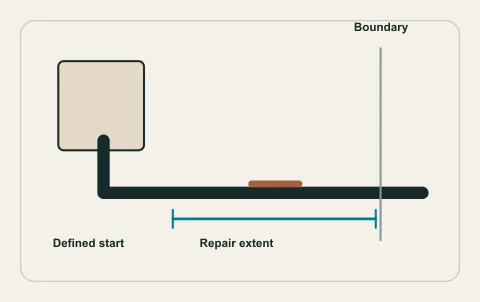
If a repair location is proposed, ask how it will be verified before opening the ground or building. Surface locating and recorded distances have uncertainty; the proposed excavation must account for other services and site conditions. Do not choose a trenchless method or full replacement solely because one frame looks alarming. The assessed defect, usable host pipe and complete route determine which methods are plausible.
Prevent repeat misuse without hiding the defect
Ask what operational changes are appropriate for the confirmed finding. Kelowna’s wastewater guidance explains why fats, oils, food solids, chemicals and pharmaceuticals are not general drain contents. Better source control can prevent avoidable problems, but it is not a substitute for repairing a confirmed structural condition.
Avoid blanket maintenance promises or a universal chemical schedule. The system and use pattern should inform any recommended service interval, and the recommendation should explain its purpose. A business may have specific source-control responsibilities beyond a household. If the symptom is linked to shared drainage, coordinate with the manager so one unit’s short-term treatment does not obscure a building-wide issue.
Turn findings into an accountable repair decision
Request a written distinction between immediate clearing, confirmed defect, further investigation and permanent repair. A repair proposal should identify route, access, permits, inspection, testing and restoration. The City’s plumbing-permit page is the starting point for actual alterations; drain symptoms alone do not settle permit scope.
Keep the final report and recording for future comparison. If flow returns but the cause remains uncertain, record that honestly. A human-reviewed request can include the symptom pattern, prior report and the decision you need to make. HAUSE does not remotely declare a drain clear, approve sewage handling or guarantee emergency attendance. It helps organize the evidence for the next appropriate professional conversation.
Questions people ask
Does a backup prove the lateral needs replacing?
Should I keep testing the fixtures?
Can a camera see everything?
Are drain chemicals a suitable first step?
What should a recurring-problem report contain?
Sources and further reading
- Wastewater ↗ · City of Kelowna. Checked 2026-10-02.
- Plumbing & heating permits ↗ · City of Kelowna. Checked 2026-10-02.
- Utilities directory ↗ · City of Kelowna. Checked 2026-10-02.
Confirm the current requirements with the responsible authority for the actual address and work. This reference does not replace site assessment or an official decision.