Set the question before booking the survey
Explain whether the objective is investigating a recurring blockage, assessing a known route, reviewing a home purchase or planning renewal. Each purpose can require different access and reporting. Provide previous recordings and notes if available; they can help compare a condition over time instead of starting from an unexplained frame.
Ask which route is intended to be surveyed and whether access or clearing is needed first. A survey of one branch is not a complete inventory of every building drain. If standing water or an obstruction may limit the view, have the expected limitation stated. The useful deliverable is a report that answers the defined question and describes uncertainty, not a promise that camera equipment can certify every buried component.
Record orientation and assessed boundaries
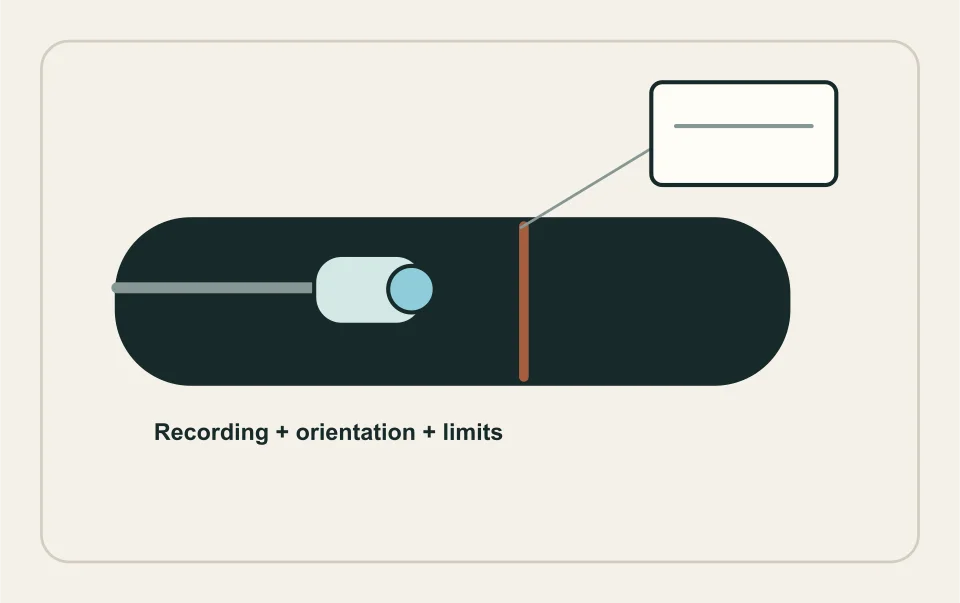
The report should identify the property, date, access point, direction of travel and route understood by the operator. Include approximate recorded position references and how any surface location was obtained. The relationship between access, building exit and public or shared boundary matters when pricing a repair or deciding who must be contacted.
Ask for a route sketch that distinguishes verified points from inferred connections. Old plans can help but may not reflect later alterations. A recording should not imply ownership merely because the camera passes through a pipe. In a shared or strata system, obtain the relevant records and manager involvement. Keep the full video file when available, not only selected images, so another professional can evaluate the surrounding condition.
Separate observations from interpretations
An operator may observe roots, deposits, a visible opening, deformation, joints or standing water. Each observation needs interpretation in context. A camera view alone may not establish why water is present, the full exterior condition or the exact amount of future service life. Ask the report to distinguish direct observations from suspected causes and repair recommendations.
If the view is obscured, record that rather than treating an unseen section as sound. A distance counter can be useful but is not a substitute for verifying a proposed excavation location. The report should say which conclusions are strong enough to support a remedy and which need additional locating, levels, access or engineering assessment. That distinction helps prevent both overreaction and an under-scoped repair.
Connect the findings to feasible repair options
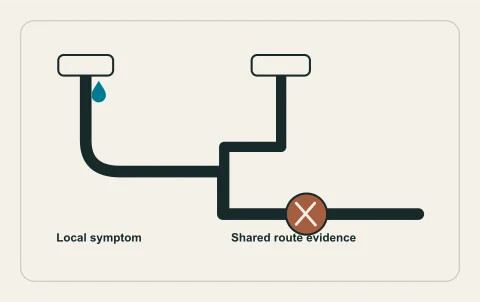
A local defect, an unsuitable overall route and a recurring operational obstruction can lead to different proposals. Ask why a spot repair, clearing, lining, another trenchless approach or open replacement is considered suitable for the assessed condition. The camera is evidence for the decision, not a method-selection algorithm.
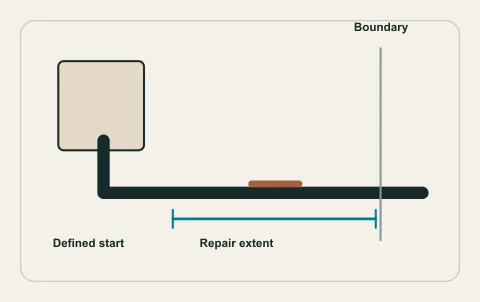
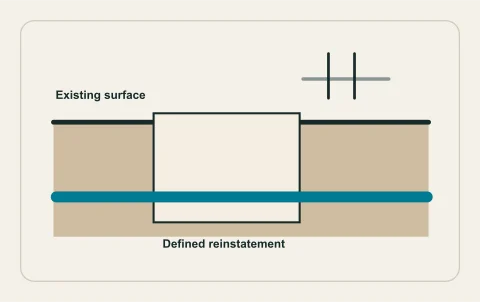
A trenchless proposal should identify its limits and the host-pipe conditions it relies on. An excavation proposal should identify the intended opening and how the location will be verified with other services considered. Include connections and inaccessible parts that remain outside the remedy. The lateral-renewal guide explains how repair boundaries, approval and restoration turn a method name into a complete scope.
Keep public, private and shared responsibilities distinct
The sanitary network connects property drainage with larger systems, but the precise responsibility boundary needs confirmation. Start public-system questions with Kelowna’s wastewater information and the appropriate utility channel. Do not assume a pipe is municipal because it is near the road or entirely private because it serves one home.
For strata property, review the Province’s common-property explanation alongside the actual plan and bylaws. Authorization to investigate and authorization to alter a shared system are separate questions. If land disturbance or a road interface is involved, ask the responsible authority about the necessary approvals before scheduling work.
Accept a report, not merely a file transfer
At handover, obtain the readable summary, full recording, route information, notable images, limitations and recommended next decision. Check that file formats can be opened and that the property and date are identifiable. A folder containing anonymous videos can become unusable when the owner changes or the original operator is unavailable.
If the report is used for a quote, have bidders identify the same repair boundary and explain any additional investigation. Keep permit and inspection responsibilities explicit for the actual alteration. A human-reviewed request can include the report and unresolved option; it does not remotely certify the pipe or make a contractor’s recommendations automatically accepted.
Questions people ask
Is a sewer video a condition certificate?
Do I need the full recording?
Does a counter reading locate excavation accurately?
Can the camera choose a trenchless method?
What should I give another bidder?
Sources and further reading
- Wastewater ↗ · City of Kelowna. Checked 2026-10-02.
- Plumbing & heating permits ↗ · City of Kelowna. Checked 2026-10-02.
- Common property and limited common property ↗ · Province of British Columbia. Checked 2026-10-02.
Confirm the current requirements with the responsible authority for the actual address and work. This reference does not replace site assessment or an official decision.