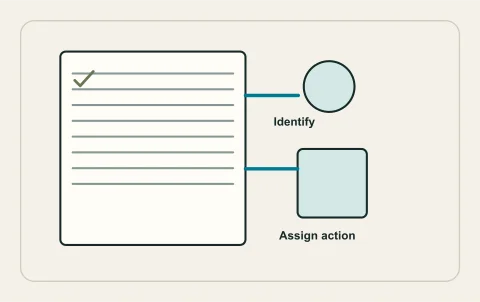
Identify essential services and consequences
List the water-dependent activities and spaces that cannot operate safely if supply or drainage is lost. Include equipment, staff and customer facilities, food or process use and affected neighbouring tenancies. Discuss the actual business requirements with relevant professionals and authorities; do not infer permission to continue operating from this guide.
Separate loss of water, contaminated backup, hot-water failure and a leak affecting the building. Each can have a different response and restart boundary. Record who decides to suspend an activity, who informs occupants and who authorizes direct assistance. A plan that names only the plumber can leave the business uncertain about safety, landlord coordination and regulatory communication when the incident actually occurs.
Verify isolation without creating a DIY response manual
Have the authorized building manager and responsible professional establish accessible isolation and what each control affects. Keep the verified information available to designated people. An old label or a valve located inside the business does not prove it serves only that tenancy. Do not discover the boundary by trial operation during an incident.
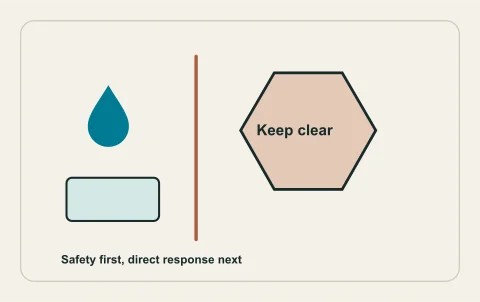
Staff should know when to stay away: water near electrical equipment, unstable ceilings, unsafe floors or sewage contamination can make access hazardous. They should not enter those conditions to reach a valve or retrieve records. The plan must prioritize direct emergency or professional response as appropriate. HAUSE’s request portal is human reviewed and is not an emergency dispatch service, so it should not be the business’s urgent-response dependency.
Maintain current direct contacts and decision authority
Keep the landlord or manager, relevant contractors, insurer contact where applicable and the correct utility route available through the business’s internal process. Kelowna’s utilities directory provides official contact routing, but confirm the actual provider and private-service boundary for the property. A public-main concern and a private appliance fault may need different responders.
State who may authorize investigation, temporary containment, permanent repair and restoration. Include a fallback when the usual decision-maker is unavailable. Do not publish staff personal numbers unnecessarily in a public request. Review contacts periodically and after a management change. A plan that depends on one person’s memory can fail even when the installed plumbing assets are otherwise well documented.
Capture facts without delaying safe response
Record the time, affected area, observed condition, operations underway and contacts made when it is safe to do so. Photograph from a safe position; do not re-enter a hazardous or contaminated area for evidence. Keep observations separate from speculation about cause or legal liability. The repair professional, restoration specialist and insurer may require different documents.
Track temporary measures and their stated limitations so they are not mistaken for permanent repair. If a shared system is involved, use the manager’s reporting process and preserve relevant route or asset information. Common-property guidance is context, not a remote determination of responsibility. Immediate protection, component ownership and coverage for resulting damage can remain separate questions.
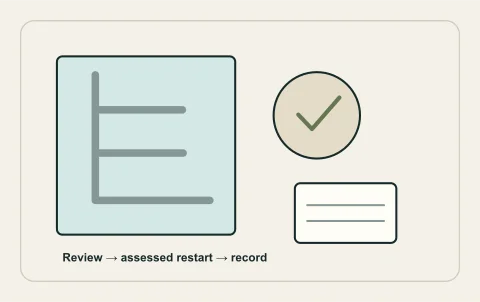
Define restart as an assessed sequence
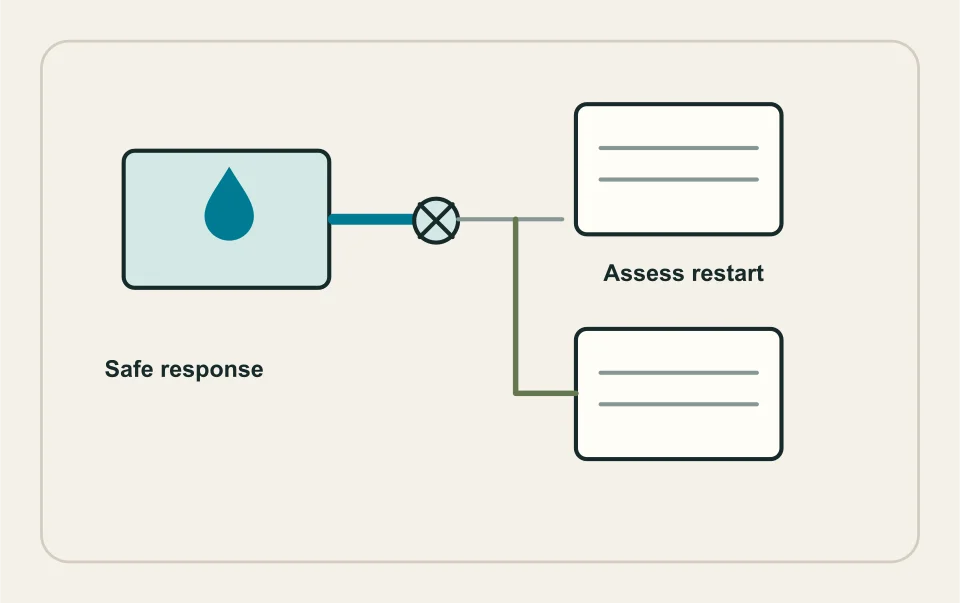
Repairing the leaking component is not automatically permission to reopen every affected activity. The system, contaminated or wet materials, equipment, electrical interfaces and business requirements may need appropriate assessment. Ask each responsible professional to identify their completion boundary and outstanding work. Coordinate approvals where an alteration is involved through the City’s permit guidance.
For water-system interruption or prolonged low use, discuss appropriate return-to-use procedures with the relevant professionals. Health Canada’s premise-plumbing guidance explains why stagnation and building-water conditions can matter. This is not a universal flushing or contaminated-cleanup instruction. Keep the restart decision grounded in the actual building and operation.
Use the incident to improve the asset and response record
Retain the confirmed cause, repairs, model changes, verified isolation, inspection or test records and restoration status. Update the response plan where the incident exposed a missing contact, inaccessible valve or uncertain responsibility. Review recurring events as a condition question instead of simply filing each invoice separately.
For non-urgent follow-up, a human-reviewed request can describe the evidence and desired improvement, such as better asset records, a planned renewal or a fault-response assessment. Avoid unnecessary staff or customer data. HAUSE is a reference portal, not a loss adjuster, emergency contractor or authority to reopen a business. A clear brief nevertheless helps the appropriate professionals focus on the unresolved cause and practical prevention.
Questions people ask
Should staff enter a wet area to isolate water?
Does a repaired pipe mean the business can reopen?
Who should authorize urgent work?
What facts matter for later review?
Can HAUSE serve as the emergency contact?
Sources and further reading
- Utilities directory ↗ · City of Kelowna. Checked 2026-10-02.
- Common property and limited common property ↗ · Province of British Columbia. Checked 2026-10-02.
- Plumbing & heating permits ↗ · City of Kelowna. Checked 2026-10-02.
- Residential premise plumbing pathogens and water quality ↗ · Health Canada. Checked 2026-10-02.
Confirm the current requirements with the responsible authority for the actual address and work. This reference does not replace site assessment or an official decision.