Confirm availability for the actual parcel
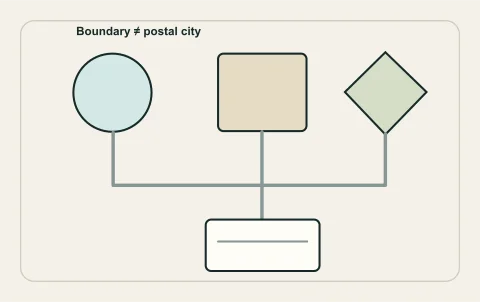
Ask the responsible utility whether the property can connect, what records describe the available point and which process applies. A neighbour’s connection, a visible manhole or a future project map is not permission for this parcel. Keep the utility’s dated reply and distinguish present availability from a planned infrastructure project. If the property lies outside City jurisdiction, identify its actual servicing authority first.
Describe the intended building use and any change in occupancy or development. Those facts may affect the required review. Do not assume a connection can be designed solely from an approximate street location. The project needs the confirmed public interface and the responsible professional’s assessment of the private route before method, cost and timing can be compared on a useful basis.
Start the public-interface enquiry with the City’s wastewater information where it is the responsible utility.
Preserve the onsite-system record
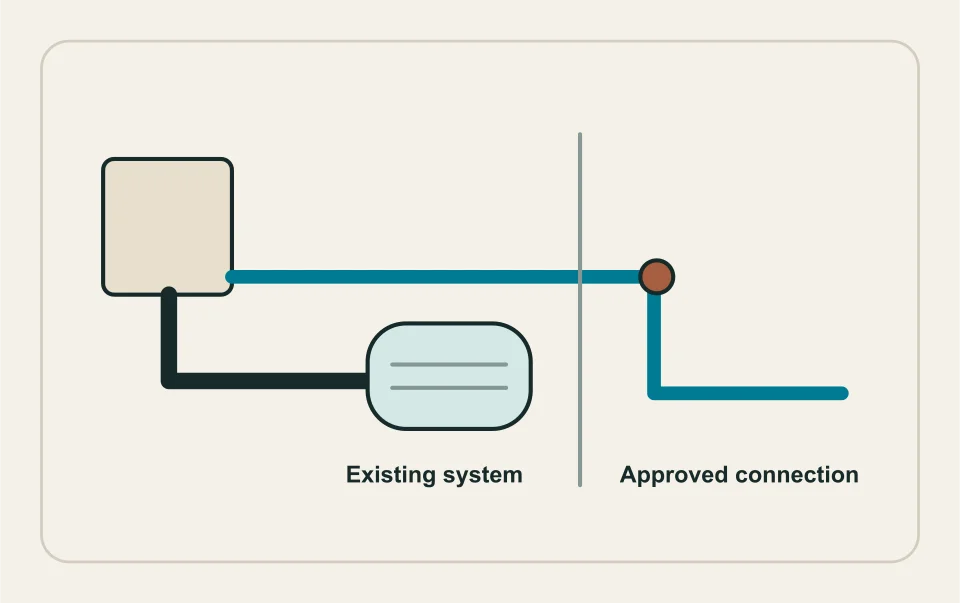
Gather the existing layout, maintenance history and available approval or assessment documents. A transition project should account for the system being replaced, not simply ignore it once a new pipe is proposed. Ask the relevant health authority and qualified specialist what process applies to the existing onsite components. Do not enter tanks or disturb buried structures to gather evidence.
Keep condition and future use separate. An onsite system appearing functional today does not establish capacity for a proposed suite, and a public connection does not automatically resolve every indoor drainage issue. Record which components serve the building and what remains unverified. The transition plan should describe the old system’s status and its required closure work alongside the new connection.
Define the private route and approvals
Professional assessment should address the building connection, route, levels, access and utility conflicts. This guide does not specify pipe grade, depth or connection dimensions. An owner sketch can identify constraints without becoming an engineered design. Ask who obtains records, locating and any further private-service investigation where ordinary utility information is incomplete.
Identify building, utility, road-use and environmental permissions relevant to the actual site. An application is not the same as an issued permit. Where strata or another owner controls access, obtain that separate authorization. Compare whether design, applications, inspections and required operator attendance are included, rather than assuming the contractor’s trench price buys every approval and interface.
Before accepting a project date, ask which design and authority milestones must precede it. Connection availability, accepted private design, authorized public work and old-system handling can have separate dependencies. Keep them as named items rather than one line called permits. If a public connection point changes, ask whether the private route, price and restoration proposal need revision. Retain the revised scope before construction proceeds. This helps an owner avoid paying for a route based on an early assumed interface or treating a conditional infrastructure discussion as confirmation that the entire transition is ready to construct.
For jurisdiction outside the City, consult RDCO’s building jurisdiction and inspection guidance before choosing a process.
Plan switchover and old-system work
Ask how wastewater service remains controlled during the transition and who authorizes the switchover. Occupancy, shared users and business operations may require a specific sequence. A contractor should explain restrictions and contingencies without promising that unexpected conditions cannot affect the planned date. Keep public connection work within the responsible operator’s approved process.
The old system’s decommissioning or other required treatment needs its own defined scope and qualified handling. Ask about waste removal, buried components, surface reinstatement and records required by the relevant authority. Do not treat an unused tank as a harmless homeowner cleanup task or assume a new sewer connection silently completes every obligation associated with the former onsite system.
Close the project with both system records
Retain the installed private route, actual connection point, checks, inspections and utility acceptance where applicable. Record the old system’s final status and relevant closure evidence. A general invoice saying “connected to sewer” may omit retained components or unfinished surface work. Ask who holds outstanding documents and whether any use restriction remains until the responsible authority completes its process.
Keep restoration separate from connection completion. Landscaping, paving and building finishes may involve later work, while retained indoor drainage may still need assessment. The property file should make both boundaries visible. Future owners need to know what was newly installed, what was decommissioned and what remains, without assuming the entire property’s wastewater infrastructure was renewed in one project.
Prepare a transition request
The transition brief should begin with the utility's confirmed connection availability and the existing onsite-system record. State the building use, proposed change and the design stage. Identify the actual property authority and which replies are still outstanding. A nearby sewer location belongs in the background, not in a completed approval field. Mark private route constraints and the person who can authorize property access without circulating unrelated ownership documents.
Ask for a sequence covering private design, public-interface permission, construction, switchover and old-system handling. Compare each stage's deliverable and responsible party. The final property record should contain the new route and connection evidence alongside the former system's actual closure status. Preserve retained components and unfinished paving, landscape or building work. If an authority requirement or connection point changes, revise the scope before treating the initial proposal as ready for construction.
Send the remaining planning questions through the human-reviewed request after urgent wastewater concerns have been addressed. A reply is not a utility approval, an onsite-system filing or a contractor reservation. KelownaPlumbing.ca provides reference information rather than constructing or dispatching the work, and it makes no attendance or response-time promise. The useful outcome is a clearer list of evidence and authority decisions, with the physical transition commissioned separately through the actual qualified people and approved processes.
Questions people ask
Does a sewer in the street guarantee a connection?
Can the old system simply be abandoned?
Can I choose grade from an online diagram?
Does one contractor price include all approvals?
What records matter after switchover?
Sources and further reading
- Wastewater ↗ · City of Kelowna. Checked 2026-10-02.
- Plumbing & heating permits ↗ · City of Kelowna. Checked 2026-10-02.
- Permit inspections & area map ↗ · City of Kelowna. Checked 2026-10-02.
- Building permits and inspections ↗ · Regional District of Central Okanagan. Checked 2026-10-02.
Confirm the current requirements with the responsible authority for the actual address and work. This reference does not replace site assessment or an official decision.