Understand the dated transition statement
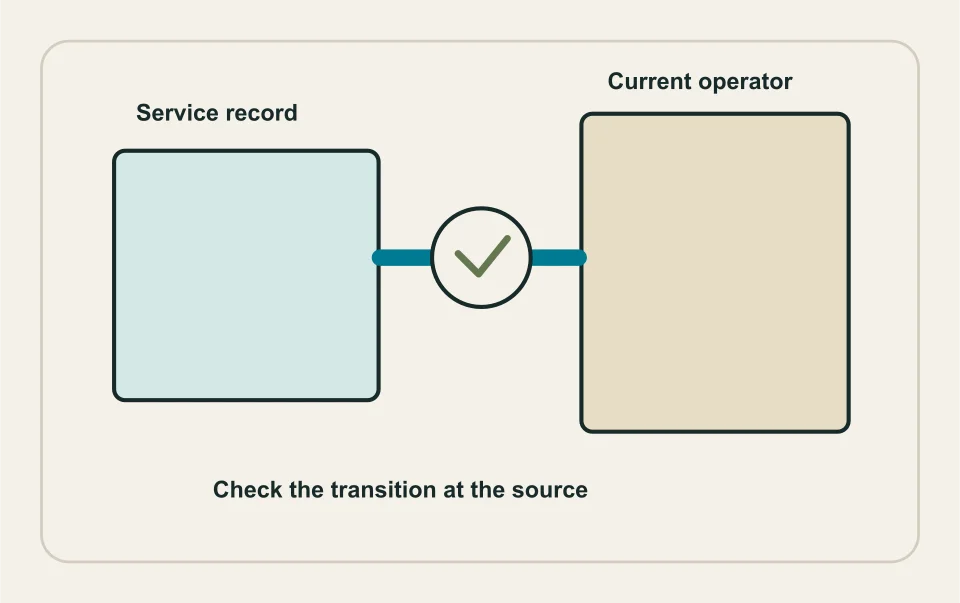
The City’s GEID transition page describes a gradual change beginning January 2025 and continuing through 2027. It should be read as current operator-transition context, not as a declaration that every older name or document is invalid. Keep legacy records with their dates and ask the current service contact about the process relevant to the property. Do not invent a single changeover date for every account, bylaw or project step.
Service continuity and administrative arrangements are separate from pipe condition. A transition announcement does not establish pressure at a fixture, identify an interior material or approve an alteration. If a project runs across several months, recheck the actual contact and submission instructions at the relevant stage. Record the reply and its scope instead of assuming a saved early page resolves every later operational question.
The dated operating context comes from the City’s GEID transition page.
Confirm supply and jurisdiction independently
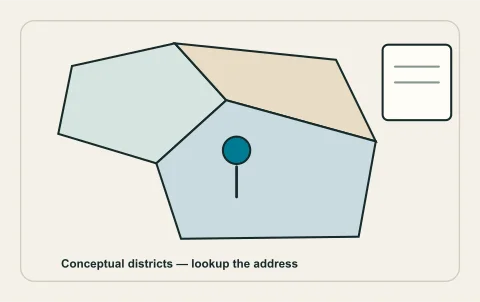
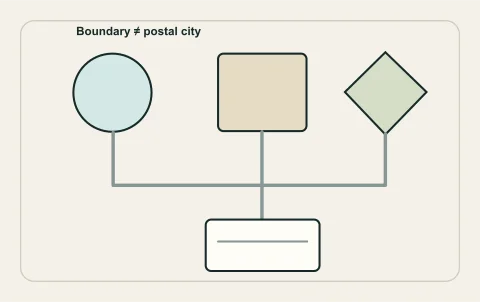
Use the official address lookup and operator confirmation for the water connection. Separately establish the building authority from the property’s actual jurisdiction. The City’s transition information discusses continued service to customers outside municipal boundaries; that does not make every served property subject to the City’s building application process. A water-service relationship and a municipal boundary answer different questions.
For an Ellison or boundary-area property, verify the actual permit authority before relying on a familiar Kelowna contact. RDCO explains that it regulates its electoral areas, while municipalities and local First Nations have their own building responsibilities. Ask the relevant office to clarify an uncertain address. Preserve the distinction in the brief rather than deciding jurisdiction from a legacy supplier label or postal city alone.
Use RDCO’s jurisdiction explanation for its electoral-area role, while separately confirming the actual property authority.
Route operational and building questions correctly
Ask the operator about current service, notices, shutdown procedures or the public connection. Ask the private professional about accessible building symptoms and investigation. Ask the responsible authority about the proposed alteration and inspection sequence. A coordinated project may involve all three, but one answer should not be represented as permission from the others.
Describe the question precisely and keep any reference number. A reported public event may explain a whole-property symptom without proving every private component sound. Conversely, a fixture fault can coexist with transition-related administrative questions. The project record should preserve confirmed observations and unresolved evidence so later professionals do not inherit a simplified explanation that skips the relevant system boundary.
Keep a small contact ledger for a project that crosses the transition period: question, official recipient, reply date and next action. Use the role or office that answered rather than assuming the historic district name fixes every future submission destination. Preserve the original reply if the process later changes, then add the updated instruction beside it. This is particularly useful when a public-interface enquiry and a private-building permit proceed at different times. The ledger should contain only necessary routing information; account credentials and unrelated billing or personal records are not needed to explain the project's technical sequence.
Keep irrigation and domestic decisions distinct
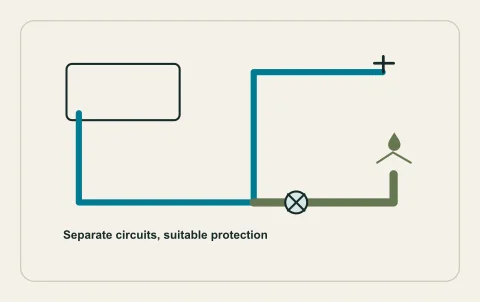
Where a property has irrigation or agricultural arrangements, identify the actual source and served use for each connection. Do not infer potability or applicable restrictions from an outdoor fixture or legacy district name. Ask the operator for current source-specific information and the qualified professional about relevant protection. A generic domestic-water diagram cannot establish every property’s connection arrangement.
Keep alterations, current use instructions and backflow suitability as separate questions. A transition notice or watering rule does not authorize a new connection. Record the protected use and device or assessment where applicable. If the use changes, obtain the necessary reassessment rather than assuming the old arrangement remains suitable because the supplier name or visible equipment has not yet changed.
Retain both historical evidence and current instructions
The property file should preserve original drawings, invoices and reports, with current operator information beside them. Avoid rewriting historical names as though they were errors. Mark which process was confirmed for the current project and when. If a later contact changes, keep the sequence understandable instead of overwriting the evidence that explains an earlier action.
After private work, obtain the changed segment, relevant checks, approval records and remaining limitations. A transition does not expand a small repair into whole-property renewal, and a new private pipe does not close every public or administrative question. Record unfinished restoration and the responsible next contact. This gives future owners a coherent history of the service context and actual physical work without a false claim that all systems or responsibilities changed together.
Prepare a transition-area request
A transition-area request should show the actual property jurisdiction and the current supplier process separately. Include the relevant dated operator reply, legacy service record and the question still unresolved. Say whether the concern is domestic service, irrigation, public-interface work or private building plumbing. Avoid replacing an old document's identity with a modern label; retain history and add the current contact information beside it.
Ask the next responsible person which process applies at the project's present stage. A long-running project may need another confirmation before connection work or reporting occurs. Keep a contact ledger with question, office, reply date and outstanding action, excluding account credentials. After private work, request the actual changed system record and approval evidence. A transition announcement should not be treated as renewal of the physical infrastructure or permission from a building authority outside its role.
A person can review these questions through the request form and reply without booking, attendance or response-time guarantees. This site is neither GEID nor a City utility office and cannot change accounts, lift advisories or approve connections. Use the actual operator for an active service issue. The later planning reply can help organize supplier, jurisdiction and scope evidence while preserving the nuance of a gradual transition and separately confirmed property responsibilities.
Questions people ask
Does the transition end every legacy process now?
Does City water service mean City permit jurisdiction?
Should old GEID names be removed from records?
Does the transition identify today’s water advisory?
How should irrigation questions be handled?
Sources and further reading
- GEID transition ↗ · City of Kelowna. Checked 2026-10-02.
- Find your water provider ↗ · City of Kelowna. Checked 2026-10-02.
- Building permits and inspections ↗ · Regional District of Central Okanagan. Checked 2026-10-02.
- Cross connection control ↗ · City of Kelowna. Checked 2026-10-02.
Confirm the current requirements with the responsible authority for the actual address and work. This reference does not replace site assessment or an official decision.