Define delivery delay separately from insufficient heat
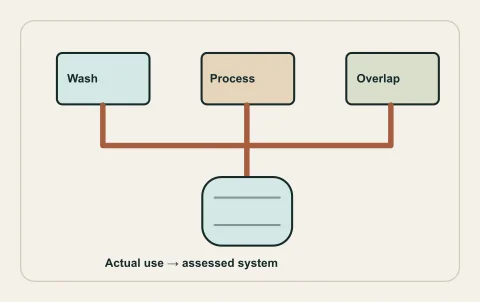
Record the affected outlets, time of day and whether the water eventually reaches the intended condition. A long wait, a temperature drop during overlap and complete loss of hot water are different complaints. Include the source equipment, any existing return loop and previous alterations in the brief. Do not assume every remote fixture is connected identically.
Residents can provide ordinary observations without repeated scald-risk testing. A professional should decide what measurements are appropriate and how to obtain them safely. Establish the objective before choosing equipment: reduced delivery delay, correction of an uneven loop, replacement of failed components or assessment of a new route. A clear baseline makes the eventual commissioning result understandable rather than relying on a general claim that the water feels better.
Verify the supply and return topology
Obtain available drawings and identify confirmed paths, branches, risers and the source connection. Distinguish actual return piping from an inferred route hidden behind finishes. Past renovations can introduce dead ends or different fixtures. Ask the designer to identify what is known, what access is needed and what remains outside the proposed work.
A circulation scheme must be appropriate for the actual building. This guide does not provide a consumer installation layout or permission to improvise a return through another connection. If the system crosses strata or tenancy boundaries, authorization and access planning are necessary. Record the route so future contractors can understand why a valve or control serves a particular area instead of relying on an anonymous pipe label.
Assess control, balance and energy implications together
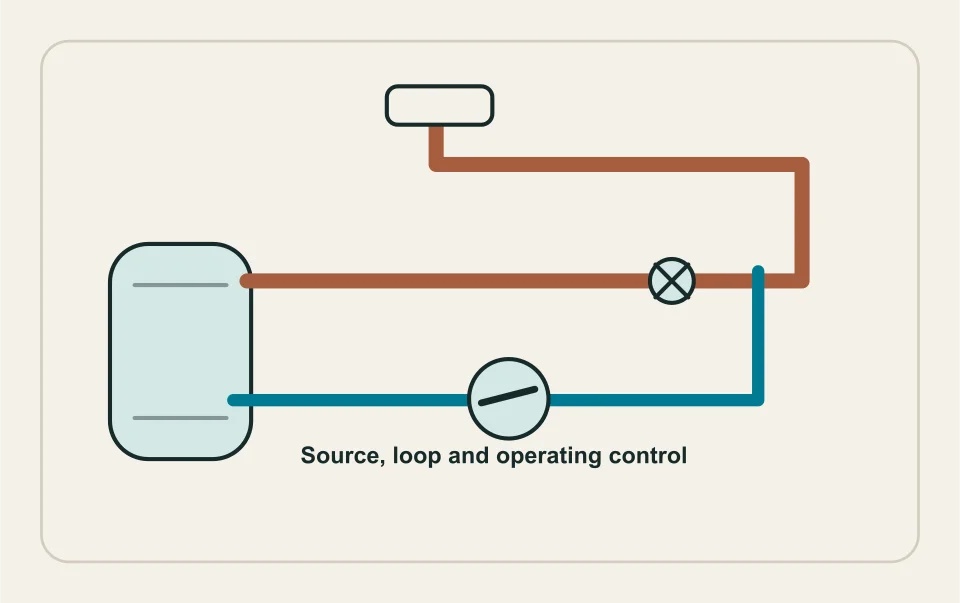
Discuss how the selected system is intended to operate, including relevant controls and demand patterns. A continuously operating arrangement and a controlled arrangement can have different operational implications, but neither should be chosen from a generic internet recommendation. Ask what distribution losses, insulation and retained components were considered.
Uneven delivery between areas can require more than replacing the pump. The professional may need to examine the route, restrictions, balancing and source interaction. Require the proposal to distinguish confirmed findings from suspected causes. Equipment substitutions should preserve the assessed design basis. A quieter or larger pump is not automatically the answer to an unresolved loop, and a claimed energy saving needs a defensible property-specific basis rather than an unsupported percentage.
Keep hygiene and scald prevention in the design
Temperature management must consider the complete system. Health Canada’s premise-plumbing guidance discusses stagnation, managed building systems and the interaction between hot-water hygiene and scald protection. A resident’s comfort complaint should not lead to an arbitrary lowering of the source setting or bypass of a protective assembly.
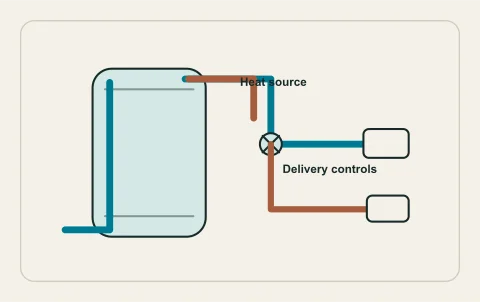
Ask how the proposed controls, delivery protection and monitoring fit the building’s needs. The responsible professionals should interpret the relevant requirements; this guide reproduces no temperature-design table. A return-loop change can interact with retained mixing equipment and the source appliance. Include those interfaces in commissioning rather than checking only that the new pump runs. Document any remaining condition that requires further water-management assessment.
Coordinate access, permits and occupied commissioning
A circulation project can affect several homes or tenancies. Identify isolation, notices, access, temporary use and restart before scheduling. Required work in concealed spaces should be coordinated with restoration and other building disciplines. A contractor’s pump replacement scope may be much narrower than a complete loop assessment.
Use Kelowna’s plumbing-permit guidance for the actual alteration and strata maintenance guidance with the property’s own documents where applicable. Agree on which measurements and outlets will be reviewed at completion. Access to representative areas must not be mistaken for verification of inaccessible portions without an explicit limitation in the report.
Handover the operating logic and evidence
Keep final routes, exact equipment, control explanations, relevant measurements, approval records and maintenance instructions. Label verified isolation and control functions so future staff do not alter settings blindly. Explain ordinary user limitations to occupants, including how to report a changed delivery pattern without carrying out hazardous tests.
If the outcome remains uneven, record the affected areas and unresolved findings rather than declaring the project complete because the pump was replaced. A human-reviewed request can include the system sketch, complaints and existing measurements. HAUSE is a reference portal; it does not remotely design a circulation loop, set temperatures or guarantee immediate hot water at every outlet. Its role is to help make the next professional assessment more informed.
Questions people ask
Will a circulation pump fix every delay?
Can a return use any nearby cold pipe?
Should residents test hot water at every fixture?
Does a new pump prove the loop is commissioned?
What records support later maintenance?
Sources and further reading
- Residential premise plumbing pathogens and water quality ↗ · Health Canada. Checked 2026-10-02.
- Plumbing & heating permits ↗ · City of Kelowna. Checked 2026-10-02.
- Division of repair duties in a strata ↗ · Province of British Columbia. Checked 2026-10-02.
Confirm the current requirements with the responsible authority for the actual address and work. This reference does not replace site assessment or an official decision.